UNIVERSTAR
Freshwater Pearl Bracelet - The Metal Element
Freshwater Pearl Bracelet - The Metal Element
无法加载取货服务可用情况
Every other bead in this collection was dug out of the ground. This one was built.
A pearl is not a mineral, and it is not cut out of anything. It is nacre — the same material a mussel lines the inside of its shell with — laid down in thousands of thin layers around something the animal wanted to get rid of. Nothing else we sell is the product of an animal's work. Everything else is a geological accident that people found, cut and polished.
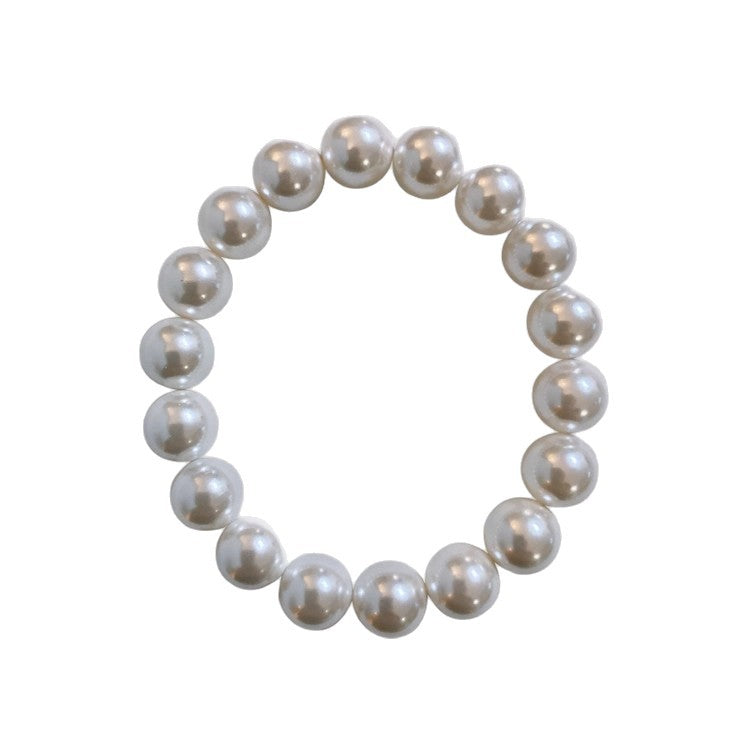
Here is the honest half of that story. Wild pearls form when something gets inside the shell and the mussel cannot push it out, and they are rare enough to be auction pieces. Almost every pearl you can buy today is farmed: a person opens the shell and puts the irritant in by hand, and then the animal spends two to five years coating it. On a freshwater farm that irritant is usually a small piece of shell, which is exactly why the pearls in the photograph are so round — a round core produces a round pearl. Putting the irritant in is human. The nacre that grows over it is not.
The nacre is what you are actually paying for, and it behaves unlike anything else in this collection. Nacre is aragonite platelets held in a protein glue, thousands of layers, each one thinner than a wavelength of light. That structure is why a pearl does not sparkle: it glows. Light goes into the layers and comes back out split slightly, which is where the pink and the blue in a white pearl come from — the same trick an oil film plays on water. Turn a strand under a lamp and the overtones move across the beads.
It belongs to the Metal element: the phase of clarity, standards and restraint, the element that separates things out and keeps only the good part, which is not a bad description of what a mussel does with its whole life. The three Metal materials in this collection differ by what they are made of. Jade is the one that keeps a promise. Clear quartz is the one you cannot get wrong. This is the one that was grown rather than mined, and the one that asks to be handled carefully.
One plain thing before you buy. A pearl is among the softest things in jewellery, in the region of 2.5 to 4.5 on the hardness scale — soft enough that ordinary objects mark it. A watch clasp, another bracelet, the edge of a table, your own perfume. The rule is simple: it goes on last, after you have finished dressing, and it comes off first. That is not a warning about this strand. It is what a pearl is, and pretending otherwise would only mean you found out later.
Why people wear it
- Because it was made, not mined. Layer over layer, over years, by a living thing. No other material here has an origin story like that.
- If your chart favours Metal. If your BaZi chart comes back Metal, this is one of the materials traditionally worn to support it.
- For light that never flashes. Nacre bends light instead of bouncing it, so a pearl glows rather than sparks: soft white with pink and blue moving through it. It is the calmest thing in this collection.
- Because it is the piece you look after. On last, off first, wiped after wearing. It is the only thing here that asks for a routine, and it repays one.
What you get
| Material | Cultured freshwater pearl |
| Colour | White, with pink and blue overtones |
| Shape | Round |
| Beads | [bead diameter] mm — [bead count] pearls |
| Cord | Elastic, knotted |
| Fit | Unisex, one size, fits most adult wrists |
| Weight | [weight] g |
| Treatment | [confirm with supplier] |
| Finish | Hand-strung |
Questions we get
How do I tell a real pearl from a shell pearl?
Look at the movement of the colour first. Nacre is layered, so the pink and blue overtones shift and slide as you turn the bead, and no two beads in a real strand sit exactly the same way. A coated imitation is either perfectly flat in colour or has a finish that looks the same from every angle. Then look closely under a lamp: nacre shows faint growth lines and small dimples, because an animal built it, while a coating is glassy-smooth. Finally put it against your mouth — a real pearl feels cool and slightly gritty on the tooth, a coated imitation feels glassy. And the price tells you as well: a strand of round pearls this size that were natural rather than cultured would cost five figures.
Freshwater or saltwater?
Freshwater, which means it was grown in a mussel in a lake or river rather than in an oyster at sea. Saltwater pearls — Akoya, South Sea, Tahitian — generally have a sharper, tighter lustre and cost several times more for the same size. Freshwater pearls are grown in far larger numbers, which is why a strand this size is affordable at all. One word on language: farmed pearls are called cultured pearls, and in the US sellers are expected to describe them that way rather than simply as pearls. Everything in this collection is cultured.
Where does the pink and blue come from?
From the layers, not from a pot of dye. The nacre stack splits the light that comes back out of the pearl, the way an oil film splits light on water, and the colour you see changes with the angle and the lamp. Dye behaves differently: it turns a pearl one flat colour from every direction. Freshwater pearls are cleaned and sometimes whitened or dyed by the trade, and pink and lavender strands usually are, but an overtone is a property of the nacre itself — you cannot dye movement into a pearl.
How do I look after them?
Wear them, and then clean them. Pearls are damaged by the things people put on their skin, so put the bracelet on last and take it off first, and wipe it with a soft damp cloth before it goes back in the pouch. Keep it away from perfume, hairspray, sunscreen, cosmetics and chlorine. Never put a pearl in an ultrasonic cleaner and never use jewellery polish on it. Store it flat in a soft pouch on its own, not loose in a box with metal or harder stones. And do not lock it away for years: nacre likes a little humidity, and pearls kept in a dry safe for a long time can craze. Being worn is good for them.
Why is it strung on elastic?
Convention. Pearls are traditionally strung on silk with a knot between each bead, so that no pearl ever touches another one. A bead bracelet is on elastic because that is what a bead bracelet is, and it means these pearls do rest against each other. Pearls are softer than the cord and softer than each other, so over a period of years, where they touch, they slowly polish one another. Keeping them clean slows it down. If the elastic ever stretches or the strand loosens, have it restrung rather than wearing it loose.
How do I know whether Metal is my element?
You can check in about thirty seconds with the chart tool on our home page. Enter your birth date, time and city, and it will show your four pillars and which element your chart favours. If it comes back Metal, this is the bracelet that matches.
Care
On last, off first. Put the bracelet on after perfume, sunscreen and hairspray, and take it off before you wash, swim, cook or exercise. Wipe it with a soft damp cloth after wearing and let it dry before it goes back in the pouch, because what dulls a pearl is skin oil and cosmetics sitting on it. Keep it away from chlorine, vinegar, lemon juice, household cleaners and silver polish. Never use an ultrasonic cleaner. Store it flat, in a soft pouch, away from metal and harder stones, and wear it often — pearls prefer to be worn rather than stored.
We explain charts; we don't sell predictions. A stone is a reminder you chose, not a promise of an outcome.
分享