UNIVERSTAR
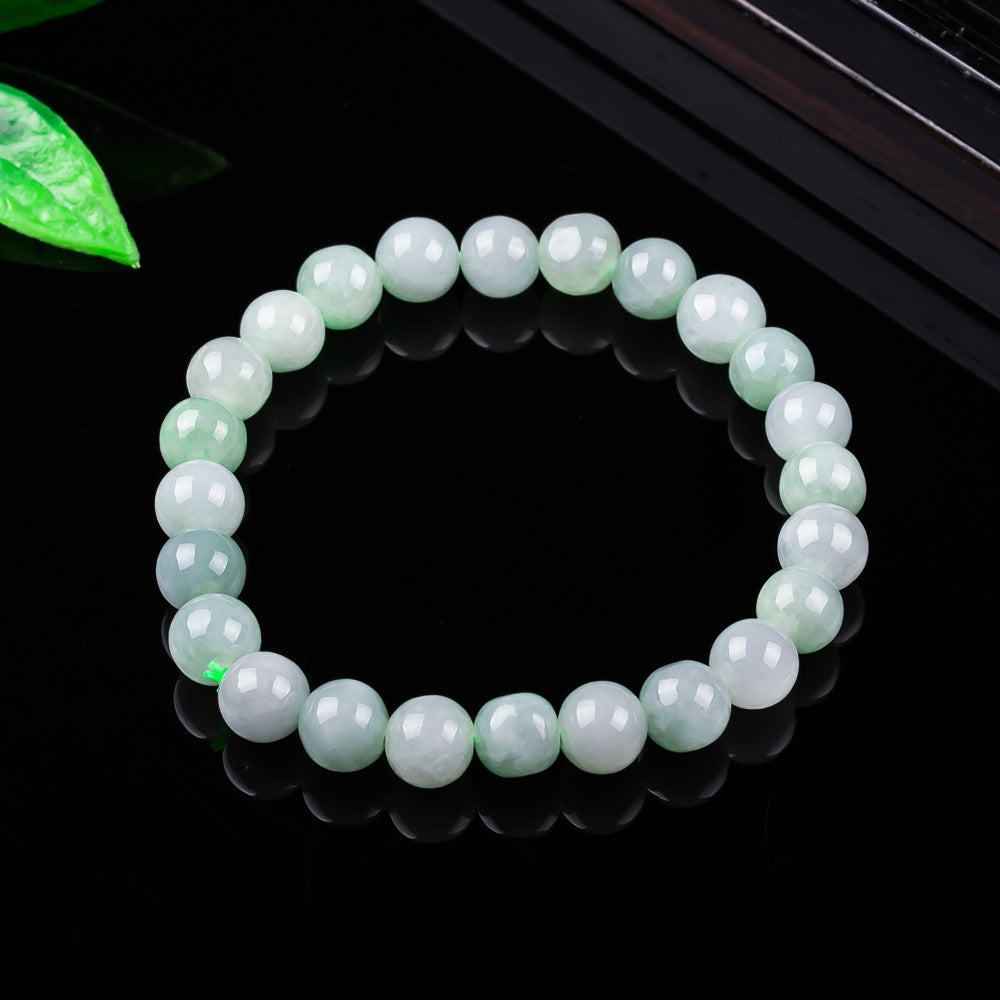
Jadeite Bracelet - The Wood Element
Jadeite Bracelet - The Wood Element
Không thể tải khả năng nhận hàng tại cửa hàng
Two minerals share the name jade. This is the rarer one.
White jade and jadeite are not the same stone. White jade is nephrite — the soft, fibrous mineral China has carved for thousands of years. Jadeite is a different mineral altogether: harder, glassier when polished, and far rarer, which is most of the reason it costs more. Almost all of the world's gem-quality jadeite comes out of Myanmar, and nowhere else has ever produced it in real volume.
This bracelet is pale green jadeite, which is the most wearable end of the range. The famous imperial green sits at the collector's end; pale green is the one you can put on every day without thinking about it.
Jadeite belongs to the Wood element, and jade has the widest reputation of any material in Chinese practice — worn for protection, for relationships, and for keeping what you already have. There is an old saying that you raise the jade for three years and it raises you for a lifetime. It is not only poetry: jade takes on the natural oil of your skin, so the beads you wear every day slowly become more translucent than the ones you leave in a drawer.
Why people wear it
- For a chart that favours Wood. The most recognisable Wood-element stone there is.
- As a keeper, not a chaser. Jade is the traditional stone for holding on to what you have built rather than chasing what you have not.
- Because it changes with you. One of the few stones here that visibly improves the longer you wear it.
- As the one piece. If you are only going to own a single jade bracelet, this is the one people mean when they say jade.
What you get
| Material | Natural jadeite |
| Colour | Pale green, translucent |
| Beads | Round, polished |
| Cord | Elastic, knotted |
| Fit | Unisex, one size, fits most adult wrists |
| Weight | 60 g |
| Finish | Hand-strung |
Questions we get
How is this different from your white jade bracelet?
They are different minerals, not two colours of the same thing. White jade is nephrite: softer, more matte, and the stone China carved for millennia. This is jadeite — harder, glassier when polished, and much rarer. If you are choosing between them, pick white jade for a quiet, matte finish and jadeite for depth and translucency.
How can I tell it is real jadeite?
Hold a bead up to the light. Good jadeite is translucent, and you should see some depth and a slight cloudiness inside rather than a flat, even colour. Jadeite also feels noticeably cold in the hand and warms slowly, where glass and plastic warm almost at once. If the colour is perfectly uniform and vivid at this price, be suspicious.
What does treated jadeite mean?
The trade grades jadeite as A, B or C. A is untreated. B has been bleached and filled with polymer to improve clarity, and C has been dyed; both look flatter and glassier than natural stone. For anything expensive, a lab report is normal in this trade and any honest seller will answer the question directly.
Will it chip?
Jadeite takes daily wear well, but it is still a stone with a grain. Avoid knocking it against metal or tile, take it off for the gym, and store it separately rather than in a pile with other jewellery.
How do I know whether Wood is my element?
You can check in about thirty seconds with the chart tool on our home page. Enter your birth date, time and city, and it will show your four pillars and which element your chart favours. If it comes back Wood, this is the bracelet that matches.
Care
Wipe with a soft damp cloth and dry it. Jade is happiest worn — the oil of your skin is what gives it depth over time, so there is no need to polish or oil it yourself. Store it away from metal to avoid scratches.
We explain charts; we don't sell predictions. A stone is a reminder you chose, not a promise of an outcome.
Chia sẻ